

What an As Built Drawings Service Covers
- John Bellisario
- Jun 8
- 6 min read
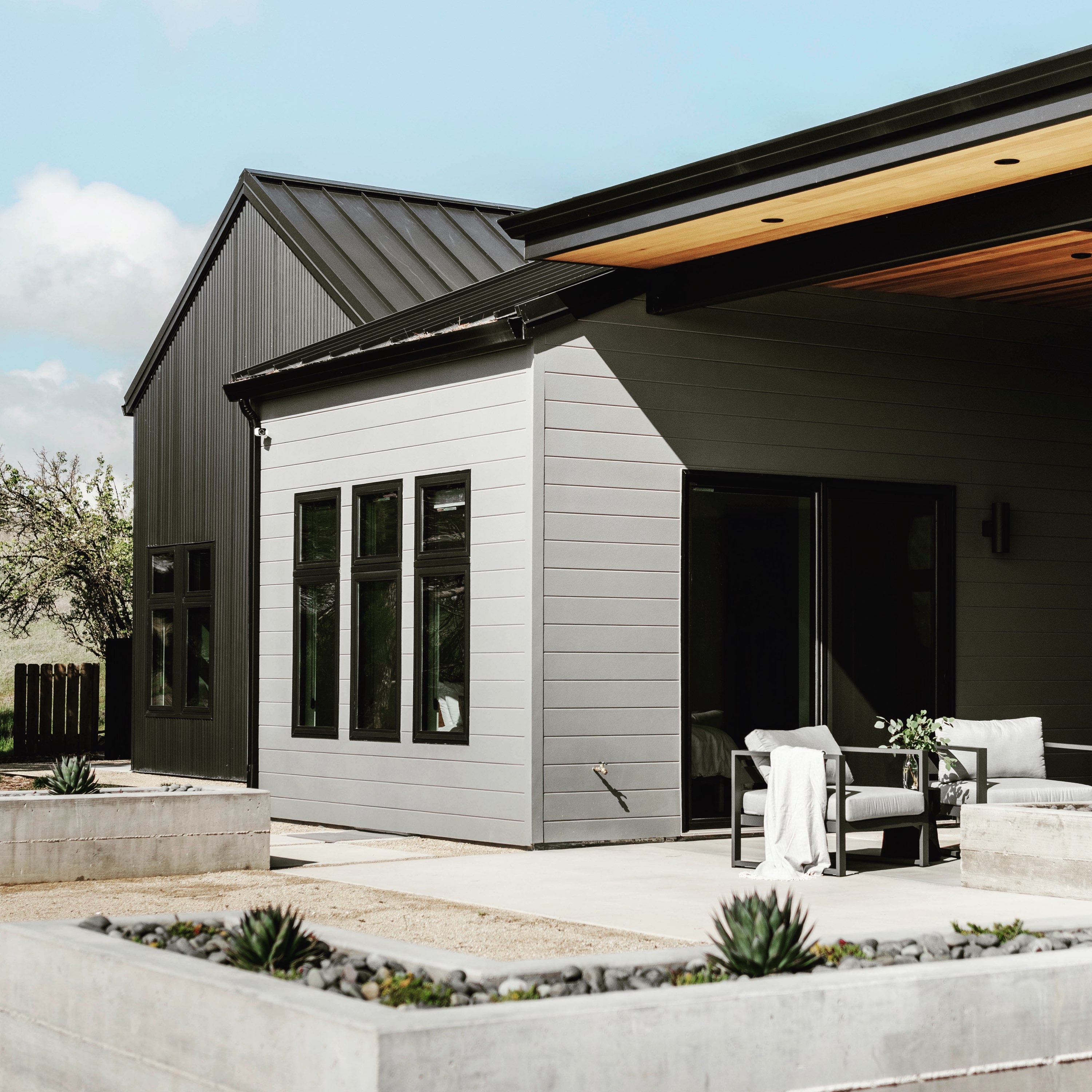
A renovation rarely starts with design. It starts with uncertainty.
Walls are not where the old plans say they are. Mechanical runs have been rerouted over the years. Ceiling heights shift between rooms. What appears straightforward during a walk-through can become expensive once demolition begins. An as built drawings service exists to reduce that uncertainty by documenting what is actually in place, not what was originally intended.
For owners, developers, and project teams, that distinction matters. Existing conditions influence scope, code strategy, budgeting, scheduling, and constructability. When the base information is wrong, every downstream decision carries more risk.
What an as built drawings service actually provides
At its core, an as built drawings service creates a reliable graphic record of an existing building or site. That record may include floor plans, roof plans, exterior elevations, building sections, reflected ceiling plans, and documentation of major architectural elements. Depending on project goals, it can also capture structural indicators, visible MEP layouts, site dimensions, and key access or life safety conditions.
The right deliverable is not always the biggest package. A tenant improvement may only need verified floor plans, ceiling heights, door and window locations, and major utility points. A repositioning effort for a mixed-use or commercial property may require a more complete set to support feasibility analysis, consultant coordination, entitlement review, and design development. The value comes from aligning the documentation scope with the decisions the project team needs to make next.
This is where many clients benefit from working with an architecture-led team rather than a documentation vendor working in isolation. Existing conditions are not just measured and drafted. They are interpreted in the context of future use, regulatory review, and construction realities.
Why accuracy matters more than speed
Every project wants fast turnaround, and that is reasonable. But speed without verification has limited value. If field dimensions are inconsistent or major building elements are missed, the drawings stop being a tool and start becoming a liability.
Accurate as-built documentation improves design efficiency because architects and consultants spend less time correcting background files. It supports more dependable budgeting because quantity assumptions and demolition scopes are tied to real conditions. It also helps during contractor pricing, where hidden discrepancies often trigger contingencies or change orders.
There is also a strategic advantage. Owners evaluating acquisition, reuse, expansion, or phased improvements need dependable existing conditions to test options. A site or building with incomplete documentation can still be developed, but decisions will be slower and often more conservative. Reliable as-builts create a better starting point for evaluating what is feasible.
Lidar-based scanning changes the standard
Traditional hand measurement still has a place on smaller, simple projects. But for complex buildings, larger floor plates, irregular geometry, historic structures, or properties with multiple remodels, lidar-based 3D scanning offers a much higher level of confidence.
A lidar workflow captures dense spatial data from the existing environment, producing a point cloud that can be used to verify dimensions and model conditions with greater precision. That matters when a building has sloped floors, non-orthogonal walls, layered additions, or congested ceiling spaces. These are the kinds of conditions that routinely create coordination problems when they are not documented well at the start.
The benefit is not just accuracy for its own sake. It is accuracy that supports better planning. Designers can work from a stronger base file. Consultants can reference verified geometry. Owners can make earlier decisions with fewer assumptions. In adaptive reuse and renovation work, that level of clarity often pays for itself quickly.
That said, scanning is not a substitute for judgment. Point clouds still need to be interpreted, organized, and translated into drawings that are useful for design and construction. The technology improves field capture, but experienced architectural oversight is what turns raw data into decision-ready documentation.
When owners and developers typically need as-built drawings
The most obvious trigger is renovation. If a building will be altered, expanded, reconfigured, or repositioned, the team needs existing conditions that can be trusted. But there are several other moments when an as built drawings service becomes especially valuable.
One is property acquisition. Buyers and investors often inherit incomplete or outdated plans, especially with older commercial assets or buildings that have changed use over time. Verified drawings provide a clearer basis for due diligence, planning, and capital forecasting.
Another is entitlement and permitting. Local jurisdictions may require existing conditions documentation to evaluate proposed work, parking counts, occupancy changes, accessibility upgrades, or code-related modifications. In those cases, incomplete drawings do more than slow design. They can weaken the clarity of the submission itself.
A third is facilities planning. Owners managing campuses, retail properties, or mixed-use holdings often need standardized base documentation before they can prioritize improvements, coordinate tenant work, or prepare for phased upgrades.
And then there is deferred coordination. Many projects begin with a rough sketch and the assumption that field verification can happen later. Sometimes that is workable on small scopes. More often, it leads to redesign once the real conditions are understood. When schedule and budget matter, documenting early is usually the more disciplined approach.
What to look for in an as built drawings service
Not every provider approaches the work with the same level of rigor. Some focus on basic measurement and drafting. Others understand how the documents will be used by architects, consultants, contractors, and review agencies.
For clients, the key question is not simply whether someone can measure a building. It is whether the resulting package will support the next stage of the project with minimal rework. That means clear file organization, an appropriate level of detail, disciplined field verification, and an understanding of what matters most for design and construction.
It also means setting expectations honestly. No existing building can be documented with absolute omniscience. Concealed conditions remain concealed until opened. Utility routing above hard lids may be partially inferred without selective investigation. Structural details inside finished assemblies may require separate verification. A credible team is clear about what is visible, what is verified, and what may still require investigation later.
This is particularly important in older California building stock, where multiple generations of work may coexist in one structure. Original construction, unrecorded modifications, code-driven upgrades, and tenant alterations often overlap. Good as-built documentation does not pretend those layers do not exist. It identifies what can be confirmed and helps frame the remaining unknowns intelligently.
As-built drawings are a project control tool
There is a tendency to treat existing conditions documentation as a preliminary task that simply gets checked off. In practice, it is closer to a project control measure.
When the existing building is documented well, teams coordinate faster. Design iterations are grounded in reality. Permitting discussions become more precise. Contractor questions during bidding are easier to answer. Even marketing and leasing efforts can benefit when measured plans and spatial data support visualization, test fits, or repositioning studies.
For sophisticated owners and developers, that is the real value. An as built drawings service is not just about producing background drawings. It is about improving the quality of decisions from the beginning of the project lifecycle.
A firm like Studio Prime Architecture approaches this work as part of a broader architectural and development process, which is often where clients see the greatest return. Existing conditions are documented with the next phases in mind - feasibility, code review, design, consultant coordination, and construction planning. That integrated perspective tends to reduce friction because the documentation is prepared for use, not just for archive.
The right scope depends on the building and the decision
Some clients need a fast, targeted record to support a lease space improvement. Others need full-building documentation to evaluate a major repositioning effort. There is no single standard package that fits every property.
The practical question is this: what information must be reliable in order to move forward with confidence? Once that is defined, the field capture method, level of detail, and drawing set can be tailored accordingly. That is a better path than either over-documenting a simple project or under-documenting a complex one.
When existing conditions are handled with care, the project starts on firmer ground. That does not eliminate every unknown, but it changes the nature of the risk. Instead of guessing early and paying for it later, the team can make decisions based on what is actually there - and that is usually where better projects begin.


Comments