

San Luis Obispo Custom Estate Architect
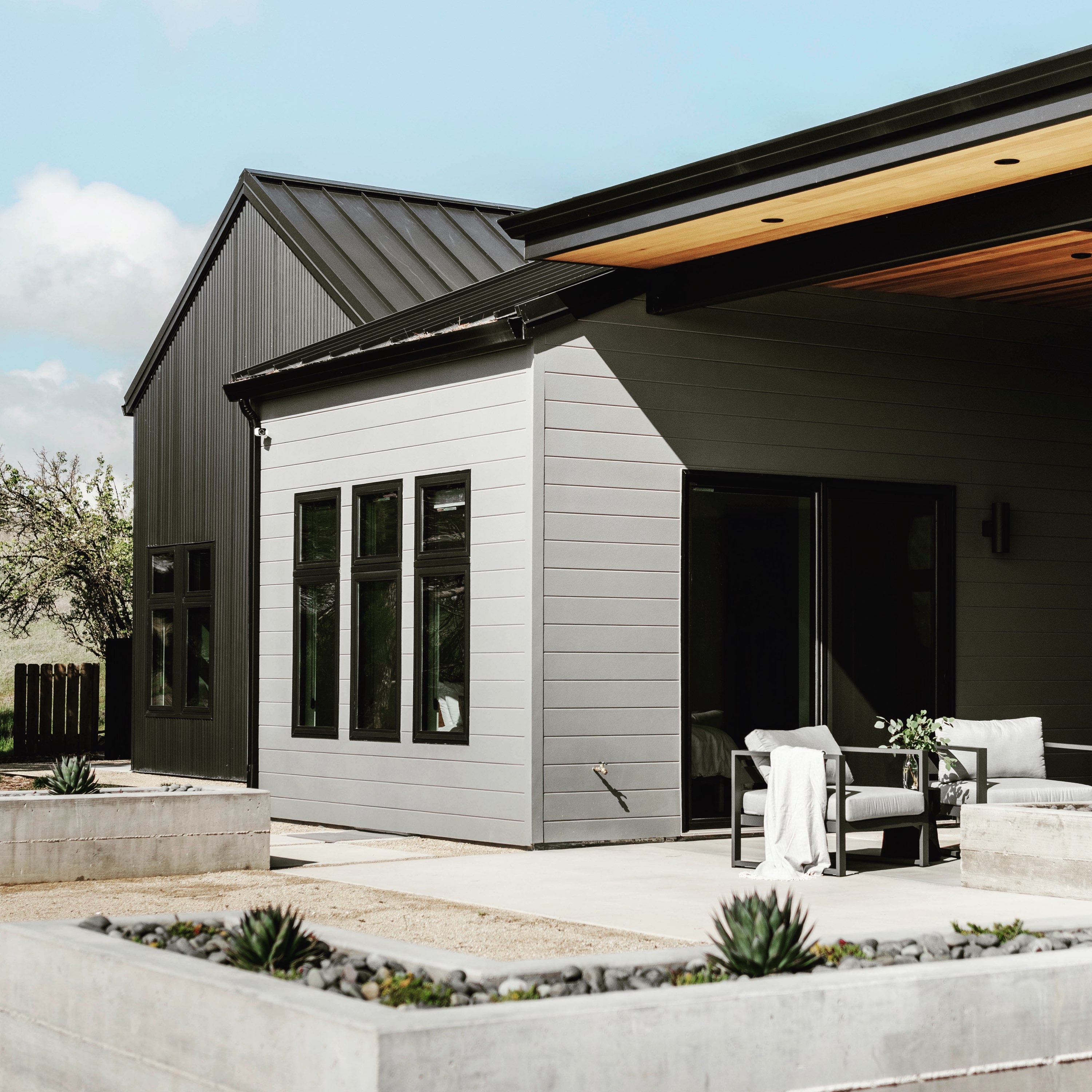
A hillside estate on the Central Coast can fail long before construction starts. The wrong siting can magnify grading costs, trigger avoidable review issues, and compromise privacy, views, or long-term value. That is why selecting a San Luis Obispo custom estate architect is not simply a design choice. It is an early strategic decision that shapes entitlement, budget control, constructability, and the quality of daily life on the property.
Custom estate work asks more of an architect than visual taste. These projects often involve larger sites, more complex utility and access considerations, stricter view and massing sensitivities, and a higher level of coordination between architecture, interiors, landscape, consultants, and builders. Owners are not just commissioning a house. They are making a long-horizon investment that needs to perform functionally, financially, and architecturally.
What a San Luis Obispo custom estate architect should bring to the table
In this market, estate architecture is shaped by more than square footage and finish level. Site topography, wildfire considerations, solar orientation, local code requirements, drainage strategy, and neighborhood context all affect what can be built and how efficiently it can be delivered. A capable architect must be able to evaluate these constraints early, before they become expensive corrections.
That is where a full-service approach matters. A custom estate project benefits from architectural leadership that extends beyond schematic design into permitting, technical documentation, consultant coordination, and construction administration. Owners and developers need more than a set of attractive renderings. They need a process that can carry a complex home from early feasibility through final execution.
This is especially true when the property includes accessory structures, guest houses, wellness amenities, extensive outdoor living areas, or specialized program elements such as wine storage, home offices, screening rooms, or multigenerational suites. Each addition raises coordination demands. The architect's role is to keep the project coherent while protecting schedule, budget, and design intent.
Estate design is a land-use problem before it becomes a design statement
Many estate projects begin with a powerful idea about the home itself. In practice, the site usually sets the first terms. Building envelope limitations, setbacks, grading allowances, geotechnical conditions, septic or utility constraints, and fire access standards can all reshape the initial vision.
For owners in San Luis Obispo County, that reality makes entitlement awareness particularly valuable. Some parcels appear straightforward until agency review surfaces issues tied to slope, drainage, access, environmental sensitivity, or visual impact. A strong architectural team identifies these factors early and develops a design response that works with them rather than against them.
This does not mean good estate architecture becomes cautious or generic. It means the design is informed. A residence that is carefully placed on the land often feels more resolved, more private, and more natural than one forced onto the site through expensive intervention. Better early decisions can also reduce structural complexity, improve energy performance, and simplify construction sequencing.
The right process protects both design quality and budget
High-end residential clients often assume budget pressure is mainly a contractor issue. In reality, major cost decisions are made much earlier. Building form, span lengths, retaining requirements, glazing strategy, roof geometry, and material transitions all influence construction cost long before pricing is finalized.
A San Luis Obispo custom estate architect should understand that aesthetic ambition and budget discipline are not competing goals. They need to be managed together. Clean planning, rational structural concepts, and well-resolved detailing can produce exceptional architecture without introducing unnecessary complexity.
There are always trade-offs. Expansive glazing may improve view capture but increase structural demand, energy compliance challenges, and solar heat gain management. A dramatic stepped foundation may better follow topography but carry higher excavation and waterproofing costs. Detached estate amenities can create a stronger site composition while adding utility runs, hardscape, and permit complexity. These are not reasons to avoid ambitious design. They are reasons to work with an architect who can explain consequences clearly and align the project with owner priorities.
Design leadership matters most when the project gets complicated
The most successful estate projects are usually not the ones with the largest budgets. They are the ones with the strongest coordination. Larger custom homes involve civil engineers, structural engineers, energy consultants, landscape designers, interior teams, builders, and often jurisdictional review agencies. Without clear architectural leadership, decisions become fragmented and rework follows.
This is where an integrated practice model creates real value. When the architect understands development feasibility, code interpretation, consultant management, and construction administration, the project gains continuity. Questions are answered in context. Design decisions are tested against real-world constraints. Documentation tends to be more precise because the team is thinking about how the work will be priced and built, not just how it will appear in presentation.
Studio Prime Architecture approaches projects through that lens. The firm's Master Builder philosophy reflects a practical understanding that strong architecture depends on more than concept. It requires technical rigor, construction awareness, and a process that supports decision-making from early planning through execution.
A custom estate should perform, not just impress
Luxury residential design can become overly focused on visual impact. Sophisticated clients usually want more than that. They want homes that organize daily routines well, create privacy without feeling defensive, age gracefully, and support resale value if market conditions change.
That means spatial planning deserves as much attention as exterior expression. Arrival sequence, service circulation, guest independence, acoustic separation, indoor-outdoor transitions, and maintenance demands all shape the lived experience of an estate. A house may look striking in elevation and still perform poorly if utility spaces are undersized, storage is inadequate, or circulation forces every activity through the same public rooms.
Long-term performance also includes resilience. Material selection, detailing, water management, solar orientation, and defensible design strategies matter on the Central Coast. A home that responds appropriately to its climate and site conditions is not only more durable. It is usually more comfortable and less expensive to operate.
How to evaluate a San Luis Obispo custom estate architect
The strongest candidates usually demonstrate more than residential style preferences. They can speak clearly about approvals, code, constructability, and project delivery. They ask disciplined questions about the property, schedule, intended use, and budget range. They also understand that some owners want a legacy residence while others are balancing personal use with investment considerations.
When reviewing an architect, look for evidence of process maturity. Can they assess a site before design assumptions harden? Can they coordinate with consultants and support agency review? Can they produce documentation that helps avoid ambiguity in pricing and construction? Can they stay engaged during construction rather than disappearing after permit submission?
It is also worth evaluating how they handle competing priorities. Estate projects often involve tension between privacy and openness, monumentality and warmth, or program size and permitting efficiency. A seasoned architect does not pretend every goal can be maximized at once. They help clients rank priorities, understand consequences, and make decisions with confidence.
Why full-lifecycle architectural support changes outcomes
Owners often underestimate how much value is created between the first sketch and final completion. Early feasibility work can prevent a poor acquisition or redirect a layout before engineering costs escalate. Entitlement consulting can reduce approval risk. Detailed coordination can preserve the design while helping the builder execute it cleanly. Construction administration can catch field deviations before they become permanent compromises.
For estate-scale work, this continuity is not a luxury add-on. It is part of responsible project leadership. A firm that remains engaged through the full lifecycle is better positioned to protect quality, manage inevitable changes, and keep the project aligned with its original objectives.
That is particularly important when architecture must support more than occupancy. Some properties are designed with future marketing, asset positioning, or phased development in mind. In those cases, visualization, planning clarity, and disciplined execution all contribute to perceived and actual value.
A custom estate should feel deliberate from the moment you enter the site to the way light moves through the home at the end of the day. That level of resolution rarely happens by accident. It comes from choosing an architect who can think beyond the image, read the land accurately, and guide the project with technical and strategic discipline from the first decision onward.


Comments